/data/photo/2026/06/09/6a27a25148904.jpg)
Pemerintah kembali menegaskan bahwa fundamental perekonomian Indonesia masih berada pada posisi yang dinilai kuat, dengan defisit Anggaran Pendapatan dan Belanja Negara (APBN) serta rasio utang tetap dalam batas aman. Menteri Keuangan Purbaya Yudhi Sadewa menyatakan, berbagai indikator makro menunjukkan tren perbaikan sehingga pemerintah memandang Indonesia tidak sedang menuju krisis. Penegasan ini disampaikan dalam sejumlah kesempatan pada awal Juli 2026, di tengah dinamika global dan pelemahan nilai tukar rupiah.
Purbaya menjelaskan, pemerintah menjaga stabilitas domestik melalui pengelolaan fiskal yang pruden, penguatan pertumbuhan ekonomi, dan peningkatan efektivitas program-program prioritas nasional. Menurutnya, pertumbuhan ekonomi makro merupakan akumulasi dari aktivitas di tingkat akar rumput, sehingga bauran kebijakan diarahkan untuk memberi stimulus pada sektor riil agar manfaatnya lebih langsung dirasakan masyarakat. Pemerintah juga memastikan inflasi tetap dalam kisaran terkendali, sementara pelemahan rupiah dinilai lebih dipicu sentimen pasar global ketimbang perubahan negatif pada fundamental ekonomi.
Dari sisi fiskal, Kementerian Keuangan menegaskan bahwa defisit APBN dijaga tetap di bawah 3% terhadap produk domestik bruto (PDB), sejalan dengan komitmen disiplin anggaran. Purbaya merinci, tahun lalu defisit berada di kisaran 2,81% PDB dan tahun ini diperkirakan tetap di bawah batas 3%. Rasio utang pemerintah disebut masih sekitar 40% terhadap PDB, level yang menurut pemerintah relatif aman dan pruden dibandingkan banyak negara lain. Stabilitas sistem keuangan juga dijaga melalui penguatan koordinasi di dalam Komite Stabilitas Sistem Keuangan (KSSK).
Purbaya menambahkan, setiap kebijakan strategis Presiden Prabowo Subianto diputuskan melalui pembahasan bersama dengan mempertimbangkan aspek ekonomi, sosial, dan kemampuan fiskal negara. Kementerian Keuangan secara rutin menyampaikan analisis risiko fiskal serta konsekuensi anggaran sebelum keputusan diambil, dengan tujuan menjaga kesinambungan keuangan negara. Sejumlah program prioritas seperti Makan Bergizi Gratis (MBG) dan Koperasi Desa/Kelurahan Merah Putih disebut terus dievaluasi agar pelaksanaannya lebih efisien, tepat sasaran, dan mampu memberikan manfaat optimal bagi masyarakat.
Pemerintah mengakui setiap program baru umumnya menghadapi tantangan di tahap awal, sehingga pengawasan dan penyempurnaan pelaksanaan menjadi fokus ke depan. Dengan kombinasi disiplin fiskal, dukungan terhadap kegiatan ekonomi riil, pengendalian inflasi, serta penguatan koordinasi otoritas sektor keuangan, Purbaya menilai landasan bagi prospek perekonomian Indonesia ke depan tetap solid meski tantangan global belum mereda.
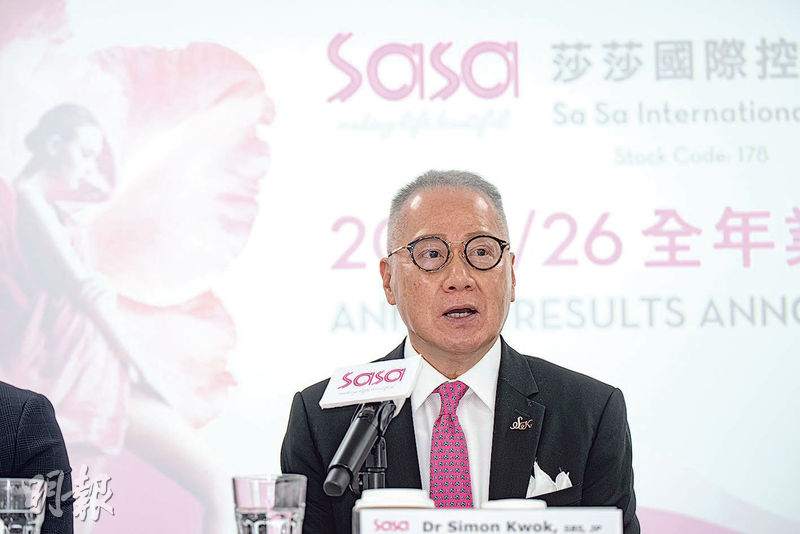
Sa Sa International Holdings Ltd. is ramping up store openings and restoring a full dividend payout after a sharp rebound in profit, underscoring management’s confidence in the recovery of Hong Kong and Macau’s beauty retail market. The cosmetics chain’s full-year sales rose 14.2% to HK$4.383 billion, while profit increased 1.6 times from a year earlier, allowing the group to boost its final dividend and return its payout ratio to 100%. Chairman and chief executive Simon Kwok said the stronger distribution reflects a “very strong” outlook, pointing to broad-based improvement in store traffic and spending.
Kwok said all key operating indicators in Hong Kong and Macau — including revenue, same-store sales, transaction volume, average ticket size and units per transaction — recorded year-on-year gains in the last financial year. Momentum has continued into the new year: in the first quarter of the current financial year, total revenue grew 24%, with offline sales up 30.9%. Hong Kong and Macau led with a 32.5% jump in offline sales, while Southeast Asia rose 17%. Online revenue slipped 3.2% overall, weighed by an 18.1% decline in mainland China, even as Hong Kong, Macau and Southeast Asia posted online growth.
On the back of the recovery, Sa Sa is reviving its brick‑and‑mortar expansion, particularly in tourist districts that were heavily rationalised during the downturn. The company plans to open 10 new stores in the current financial year; it has already added outlets in Mong Kok and Tsim Sha Tsui, including a large upstairs shop of about 6,000 to 7,000 square feet at the Mong Kok Man Wah Centre, on top of an existing ground‑floor unit. A store at the Airside mall in Kai Tak is slated to open in August, and another at Lok Ma Chau is planned to capture cross‑border traffic. Kwok said tourist‑area stores are now about half the number they once were, leaving “substantial room” to rebuild the network, though he stressed the group will not neglect local customers.
Store format will be a key part of the strategy. Kwok said he and his wife favour large outlets and that she has advocated opening flagship stores to serve both mainland and local shoppers in a more spacious, comfortable environment. Still, decisions between large and small formats will depend on rents and operating costs; smaller shops require less staff and investment. He said that while the opening of new outlets may “slightly” dilute same‑store sales metrics, the impact should be limited as long as locations and rental terms are carefully chosen. Footfall remains the main focus: “Only when there are people will there be revenue,” he said, adding that broader product assortment and competitive pricing should help underpin demand even as more drugstore and beauty chains enter the market.
Sa Sa also aims to stabilise and eventually grow its Southeast Asian operations, where the group ended the last financial year with 75 stores — 70 in Malaysia and five in Singapore. The region’s near‑term target is to achieve break‑even. Three of the five Singapore stores are already profitable, and Kwok said the company would consider opening more outlets there if suitable opportunities arise, noting that Singaporean sales growth was particularly strong in the second half of the year. The Malaysian business is described as stable, with management planning tighter cost control. Kwok played down concerns about competition from other travel destinations and cross‑border consumption trends, saying that Hong Kong remains convenient for many mainland visitors, some of whom come once or twice a month, and that the company’s breadth of products and pricing remain competitive.