Nordrhein-Westfalen ringt um Finanzierung: Droht Patienten eine Eigenbeteiligung beim Notruf?

11.06.2026


Im monatelangen Streit um die Finanzierung des Rettungsdienstes in Nordrhein-Westfalen wächst der Druck auf Kommunen, Krankenkassen und Landesregierung. Der nordrhein-westfälische Städtetag warnt vor „erheblichen Finanzierungslücken“ und sieht die Funktionsfähigkeit des Notfalldienstes gefährdet. Hintergrund ist die Frage, wer die Kosten für sogenannte Fehlfahrten trägt – Einsätze, bei denen am Ende kein Patient in ein Krankenhaus transportiert wird. Die gesetzlichen Krankenkassen hatten angekündigt, sich ab 2026 an diesen Kosten nicht mehr zu beteiligen und weigern sich seit diesem Jahr, Fehlfahrten vollständig zu bezahlen.

Die Landesregierung versucht, den Konflikt mit einer Übergangslösung zu entschärfen. Gesundheitsminister Karl-Josef Laumann (CDU) legte dem Gesundheitsausschuss des Landtags einen Musterbeschluss vor, der auf ein Angebot der Kassen zurückgreift: Demnach sollen die Krankenkassen übergangsweise die Hälfte der Kosten für Fehlfahrten übernehmen. Die Regelung wäre jedoch an eine Obergrenze gebunden – sie gilt nur, solange der Anteil der Fehlfahrten an allen Einsätzen nicht über 15 Prozent steigt. Tatsächlich liegt diese Quote in vielen Städten laut Landesangaben bei bis zu 25 Prozent.

Für die Kommunen reicht der Vorschlag nicht aus. Vertreter des Städtetags kritisieren, dass Städte auf hohen Summen sitzenblieben, sollten die Kassen nur einen Teil der Fehlfahrten finanzieren. Angesichts der angespannten Haushaltslage sehen sie kaum Spielraum, die Lücken aus eigenen Mitteln zu schließen. In Beschlüssen, die der Deutschen Presse-Agentur vorliegen, ist von einem Szenario die Rede, in dem die Kommunen gezwungen sein könnten, von allen Menschen, die einen Rettungswagen rufen, hohe Eigenanteile zu verlangen. Der Rettungsdienst sei eine „riesige Errungenschaft“ der Gefahrenabwehr und dürfe „nicht unter Druck geraten“, heißt es.

Eine ursprünglich geplante landesweit einheitliche Rahmenvereinbarung zwischen Kommunen, Krankenkassen und Land zur dauerhaften Finanzierung des Rettungsdienstes ist gescheitert. Nach Einschätzung des Städtetags lasse sich dieses Modell „nicht verwirklichen“. Stattdessen sollen nun einzelne Städte selbst entscheiden, ob sie den vom Land vorgeschlagenen Übergangsmodus akzeptieren und individuelle Vereinbarungen mit den Kassen schließen. Im Gegenzug erwartet die Landesregierung, dass die Kommunen die Strukturen des Rettungsdienstes in NRW auf den Prüfstand stellen und Einsparmöglichkeiten prüfen. Für Versicherte bleibt damit offen, ob und in welchem Umfang sie künftig an den Kosten eines Notrufs beteiligt werden könnten.


Hong Kong Secondary Prices Rise, Record Deal in Cheung Sha Wan Signals Firming Demand

05.07.2026


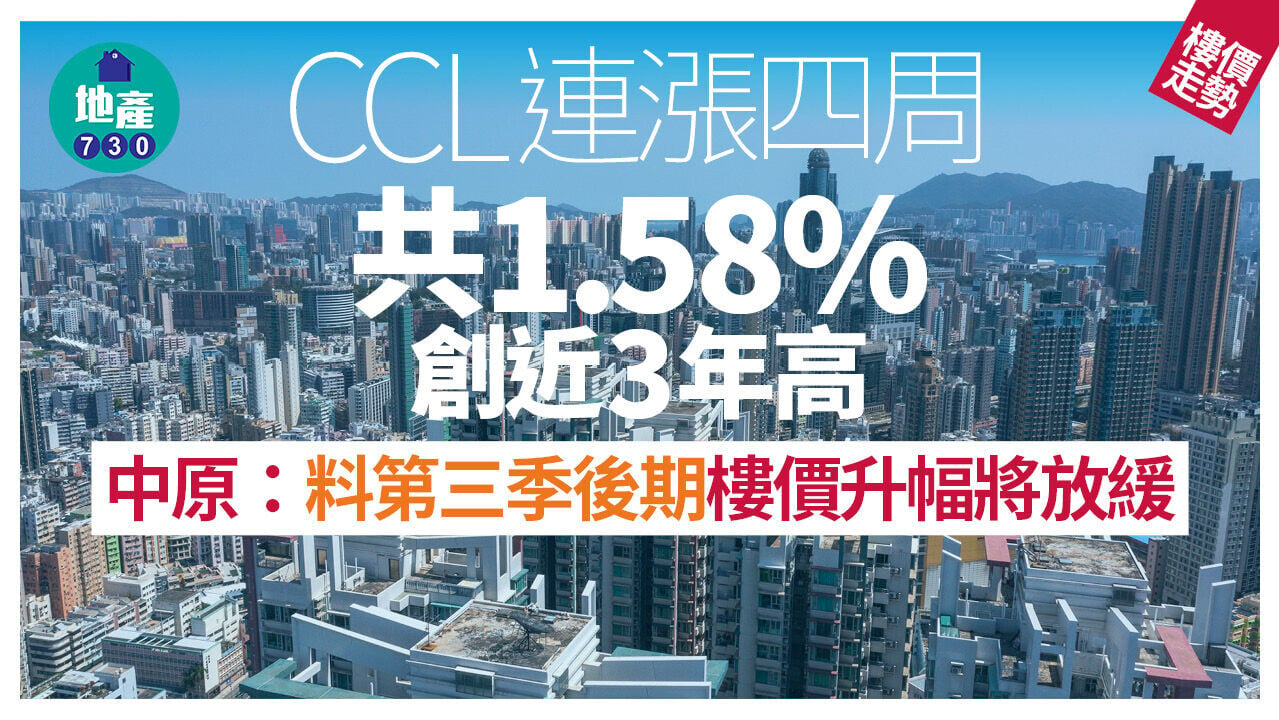
Hong Kong’s residential property market is extending a steady recovery, with key price gauges approaching levels last seen nearly three years ago, even as analysts warn momentum is likely to moderate in the coming quarter. The Centaline City Leading Index (CCL), which tracks secondary private home prices, rose for a fourth straight week to 159.94, up 0.57% on the week and 1.58% over the past month, marking its highest reading since around September 2023. The index has gained about 10.98% so far this year, underscoring a strong rebound in the second-hand segment.

Market data suggest the upswing is broad-based across different flat sizes, with larger units showing particular strength recently. Sub-indices for large housing estates and small-to-medium units advanced 0.61% and 0.43% respectively over the week, each climbing for a second consecutive week to near three-year highs. Prices of large units rose 1.25% in the latest week, extending a three-week gain of 3.01% to reach a two-and-a-half-year high. Regionally, Kowloon led with a 1.31% weekly rise to a near three-year high, while Hong Kong Island added 1.12% over the week and 2.34% across two weeks. New Territories East and West slipped 0.38% and 0.24%, ending their recent upward runs.

The official Rating and Valuation Department’s private home price index paints a similar picture of sustained recovery over a longer horizon. The index climbed 1.42% in the latest month to 321.9, its 12th consecutive monthly gain and a 12.36% increase from a year earlier. For the first five months of the year, official prices are up 7.44%. Still, both the CCL and the official gauge remain below their 2021 peaks: the CCL is about 16.41% under its August 2021 record of 191.34, while the government index is roughly 19.14% shy of its September 2021 high of 398.1, highlighting the distance yet to recover from the last cycle’s top.

Smaller units continue to outperform. Prices for A, B and C category flats — those up to 1,076 square feet — advanced 1.47% month on month and 12.57% year on year to 324.2 on the official scale, the highest level in about 32 months. Larger D and E category units of 1,076 square feet or more also rose, but at a slower clip, with their index up 1.17% on the month and 8.99% on the year to a roughly 31‑month high of 284.9. In the secondary market, sentiment is being reinforced by record-setting deals: at Yuet, a redevelopment project in Cheung Sha Wan near the MTR station, a one‑bedroom flat recently changed hands for HK$6.088 million, or HK$17,394 per square foot on a usable basis, the highest price per square foot recorded in the estate’s second-hand market. The seller, who bought in the first launch about two years ago, booked a paper gain of more than HK$870,000, illustrating improving prospects for recent purchasers.

That momentum, however, is colliding with a more uncertain macro backdrop and shifting financial conditions. Since late May, tightened action by mainland regulators against illegal cross-border investment has weighed on Hong Kong equities, with continued stock market weakness and slower first-hand project sales feeding into more protracted bargaining in the secondary segment. Concerns that the US may raise interest rates again have also contributed to a more cautious tone among buyers. Centaline analysts expect the pace of home-price gains to slow from the latter part of the third quarter, as the earlier surge gives way to more selective demand.

Financing dynamics are another source of restraint. According to industry commentary, an easing of tensions in the Middle East has coincided with capital outflows from Hong Kong, pushing interbank rates higher and reducing the scope for further cuts in mortgage costs in the near term. With prices having already rebounded, rental yields have edged lower, prompting some potential investors to reconsider the timing of their purchases. Even so, the leasing market remains firm: the official rental index reached 204.1 in the latest month, up 0.34% and notching its seventh straight advance to a record high, 5.1% above a year earlier and about 1.8% higher over the first five months of the year.

For now, the data point to a housing market that has clearly emerged from its recent trough but is still some distance from its historic highs, with gains increasingly vulnerable to shifts in global interest-rate expectations and equity-market sentiment. Developers face the added challenge of new supply from large-scale projects in coming years, which could divert some demand away from the secondary sector. With both price and rent indices on multi‑month winning streaks, the balance between affordability, financing costs and investment returns is likely to determine how durable Hong Kong’s latest property upswing proves to be.