China Warns Japan, Philippines Over ‘Wrongful’ Maritime Boundary Talks
China has issued a formal legal challenge to plans by Japan and the Philippines to negotiate a maritime boundary in waters east of Taiwan, arguing the talks constitute an "internationally wrongful act" because they bypass Beijing, which also claims rights in the area. A legal commentary and opinion released by the Ministry of Natural Resources’ China Institute for Marine Affairs say the two US allies are proceeding "without consultation with China" in a zone where the three countries’ exclusive economic zone and continental shelf claims overlap extensively.
The Chinese side argues that, given the "overall geographical situation and the relative positions of the relevant coasts," any delimitation of exclusive economic zones (EEZs) and continental shelves in the waters east of Taiwan inevitably involves China as well as Japan and the Philippines. Under the United Nations Convention on the Law of the Sea, all three are coastal states entitled to claim EEZs extending 200 nautical miles from their baselines. Beijing says those claims intersect in much of the area that Tokyo and Manila intend to address bilaterally, making a two-party negotiation inconsistent with obligations owed to a third claimant.
In the legal documents and public statements, Chinese agencies contend that the move violates principles of sovereign equality, good faith, cooperation and self-restraint under international law. The Ministry of Natural Resources commentary and the think tank opinion both state that the announcement "in disregard of the region's specific geographical circumstances" has harmed China’s maritime rights and interests. The Foreign Ministry has lodged what it calls solemn representations with Japan and the Philippines, and a spokeswoman for the State Council’s Taiwan Affairs Office described the proposed delimitation talks as "completely illegal, null and void."
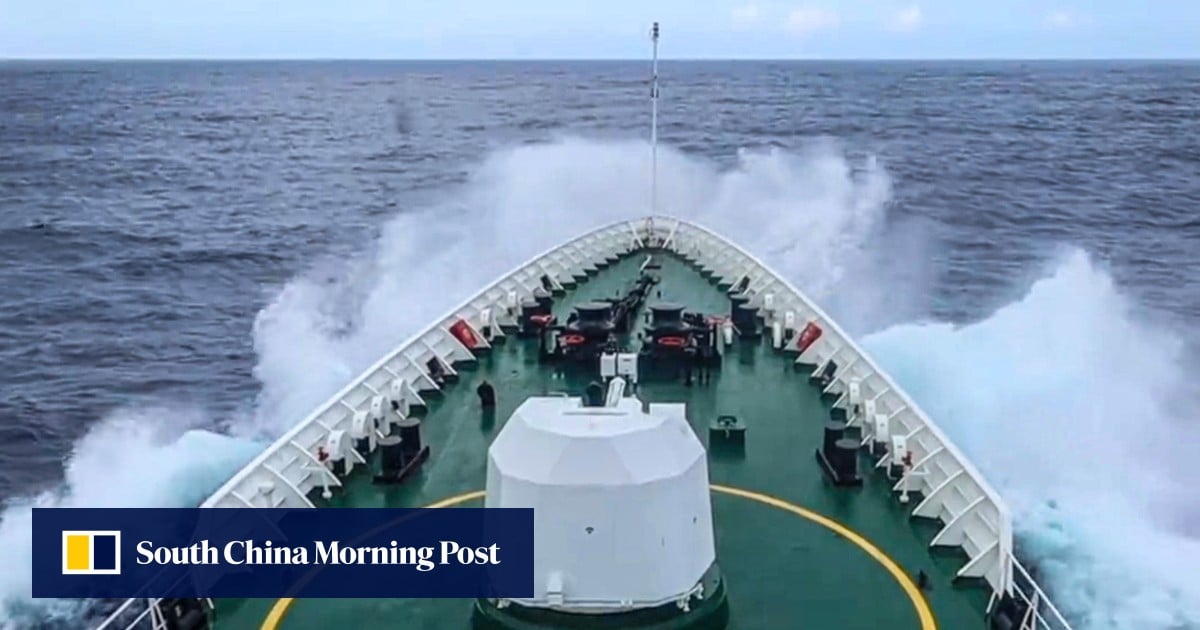
Beijing also underscores that, as the "state whose rights and interests have been injured," it is "entitled to invoke the responsibility of Japan and the Philippines" over what it labels "internationally wrongful acts." It is calling on the two governments to halt their bilateral negotiations and instead enter into consultations with China. Relevant Chinese maritime authorities, including the China Coast Guard, have conducted patrols in waters east of Taiwan in recent days, which officials in Beijing describe as a lawful exercise of jurisdiction in areas where they say China’s EEZ and continental shelf claims overlap with those of its neighbors.