In der Hamburger Elbe hat sich das alljährliche Sauerstoffloch in diesem Jahr deutlich früher und mit besonders niedrigen Werten ausgebildet. Nach Angaben des Bündnisses „Lebendige Tideelbe“ ist die Sauerstoffkonzentration im Bereich des Hamburger Hafens bereits Anfang Juni an mehreren Messstationen unter die kritische Marke von vier Milligramm pro Liter gefallen. An der Station Seemannshöft bei Finkenwerder wurden zeitweise weniger als zwei Milligramm pro Liter gemessen – ein Bereich, den Umweltverbände als akut tödlich für viele Fischarten einstufen. An derselben Station wurde zuletzt sogar ein Wert von 1,4 Milligramm pro Liter registriert.
Auch an der Messstation Blankenese zeigte sich ein ähnliches Bild: Dort sank der Sauerstoffgehalt zeitweise ebenfalls auf unter zwei Milligramm pro Liter. Im Vorjahr waren vergleichbare Werte erst rund zwei Wochen später aufgetreten. Das Bündnis aus BUND, Nabu und WWF warnt, der Hamburger Hafen werde damit Jahr für Jahr zu einer „Todeszone“ für Wasserorganismen. Nach Einschätzung der Verbände verenden bei solchen Bedingungen Tausende Fische unbemerkt unter der trüben Wasseroberfläche; betroffen seien sowohl Jungfische als auch ausgewachsene Tiere.
Besonders kritisch ist die Lage für Fischlarven und Jungfische, die den belasteten Abschnitten nicht ausweichen können. Nach Angaben der Umweltorganisationen gilt alles unter vier Milligramm Sauerstoff pro Liter als gefährlich, Werte unter zwei Milligramm lassen den Tieren kaum Überlebenschancen. Als besonders gefährdet nennen die Verbände den Stint, eine Leitart der Tideelbe, aber auch Wanderfische geraten unter Druck, weil niedrige Sauerstoffgehalte ihre Wanderbewegungen und Fortpflanzung beeinträchtigen. Erste Totfunde – darunter zwei Störe, einige Brassen und zahlreiche vom Aussterben bedrohte Blankaale – meldete bereits der Anglerverband Hamburg.
Die Hamburger Umweltbehörde bestätigt die kritischen Messwerte in den Bereichen Blankenese, Seemannshöft und Bunthaus und hält lokale Fischsterben, insbesondere bei Jungfischen und Larven, für sehr wahrscheinlich. Als Ursachen werden mehrere Faktoren genannt, darunter hohe Wassertemperaturen, Nährstoffeinträge, Algenwachstum und geringe Oberwassermengen. Das Bündnis „Lebendige Tideelbe“ sieht zusätzlich den Ausbau der Fahrrinne und die jüngsten Maßnahmen zur Elbvertiefung als zentrale Treiber des jährlichen Sauerstofftiefs. Gemeinsam mit BUND und WWF fordert der Nabu, Flachwasserzonen zu schaffen und die letzten Baggerarbeiten zur Vertiefung zurückzunehmen. Die zusätzliche Tiefe der Fahrrinne werde kaum genutzt, argumentieren die Verbände – die ökologische Belastung der Tideelbe sei dagegen jedes Jahr deutlich sichtbar.


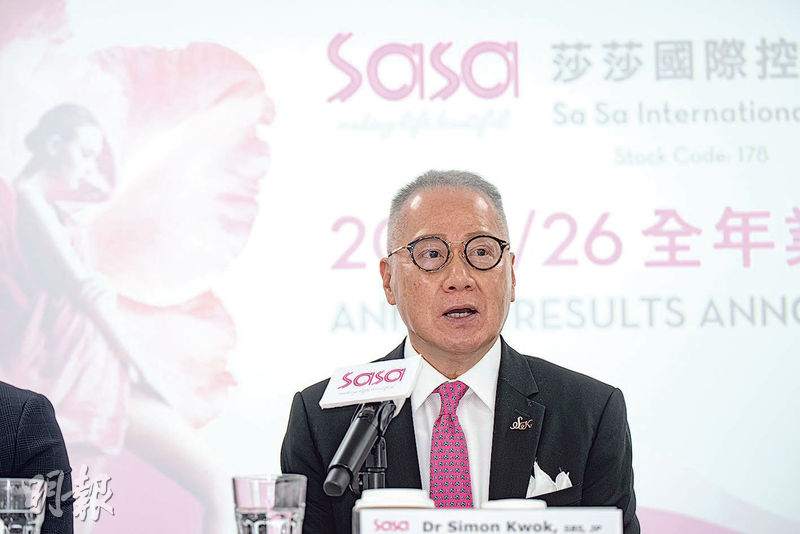
Sa Sa International Holdings Ltd. is ramping up store openings and restoring a full dividend payout after a sharp rebound in profit, underscoring management’s confidence in the recovery of Hong Kong and Macau’s beauty retail market. The cosmetics chain’s full-year sales rose 14.2% to HK$4.383 billion, while profit increased 1.6 times from a year earlier, allowing the group to boost its final dividend and return its payout ratio to 100%. Chairman and chief executive Simon Kwok said the stronger distribution reflects a “very strong” outlook, pointing to broad-based improvement in store traffic and spending.
Kwok said all key operating indicators in Hong Kong and Macau — including revenue, same-store sales, transaction volume, average ticket size and units per transaction — recorded year-on-year gains in the last financial year. Momentum has continued into the new year: in the first quarter of the current financial year, total revenue grew 24%, with offline sales up 30.9%. Hong Kong and Macau led with a 32.5% jump in offline sales, while Southeast Asia rose 17%. Online revenue slipped 3.2% overall, weighed by an 18.1% decline in mainland China, even as Hong Kong, Macau and Southeast Asia posted online growth.
On the back of the recovery, Sa Sa is reviving its brick‑and‑mortar expansion, particularly in tourist districts that were heavily rationalised during the downturn. The company plans to open 10 new stores in the current financial year; it has already added outlets in Mong Kok and Tsim Sha Tsui, including a large upstairs shop of about 6,000 to 7,000 square feet at the Mong Kok Man Wah Centre, on top of an existing ground‑floor unit. A store at the Airside mall in Kai Tak is slated to open in August, and another at Lok Ma Chau is planned to capture cross‑border traffic. Kwok said tourist‑area stores are now about half the number they once were, leaving “substantial room” to rebuild the network, though he stressed the group will not neglect local customers.
Store format will be a key part of the strategy. Kwok said he and his wife favour large outlets and that she has advocated opening flagship stores to serve both mainland and local shoppers in a more spacious, comfortable environment. Still, decisions between large and small formats will depend on rents and operating costs; smaller shops require less staff and investment. He said that while the opening of new outlets may “slightly” dilute same‑store sales metrics, the impact should be limited as long as locations and rental terms are carefully chosen. Footfall remains the main focus: “Only when there are people will there be revenue,” he said, adding that broader product assortment and competitive pricing should help underpin demand even as more drugstore and beauty chains enter the market.
Sa Sa also aims to stabilise and eventually grow its Southeast Asian operations, where the group ended the last financial year with 75 stores — 70 in Malaysia and five in Singapore. The region’s near‑term target is to achieve break‑even. Three of the five Singapore stores are already profitable, and Kwok said the company would consider opening more outlets there if suitable opportunities arise, noting that Singaporean sales growth was particularly strong in the second half of the year. The Malaysian business is described as stable, with management planning tighter cost control. Kwok played down concerns about competition from other travel destinations and cross‑border consumption trends, saying that Hong Kong remains convenient for many mainland visitors, some of whom come once or twice a month, and that the company’s breadth of products and pricing remain competitive.