Hà Nội sẽ bắt đầu thí điểm vùng phát thải thấp trong Vành đai 1 từ ngày 1/7 đến hết ngày 31/12/2026, tập trung vào khu vực hồ Hoàn Kiếm và phố cổ. Đề án “Vùng phát thải thấp trong Vành đai 1 TP Hà Nội” đã được HĐND và UBND thành phố phê duyệt, được xem là bước đi đầu tiên trong lộ trình từng bước hạn chế phương tiện sử dụng nhiên liệu hóa thạch tại khu vực nội đô, nhằm thúc đẩy giao thông xanh và cải thiện chất lượng không khí.
Theo thông cáo của cơ quan chức năng, Hà Nội không cấm đồng loạt xe mô tô, xe gắn máy và ô tô sử dụng xăng, dầu trên toàn bộ Vành đai 1. Thay vào đó, thành phố áp dụng các biện pháp hạn chế có chọn lọc tại khu vực 1 và khu vực 2 thuộc phường Hoàn Kiếm, tùy theo loại phương tiện và khung giờ. Trong giai đoạn thí điểm đến hết năm 2026, vùng kiểm soát tập trung ở khu vực trung tâm du lịch – dịch vụ, sau đó lộ trình sẽ nâng dần yêu cầu về quy chuẩn khí thải từ năm 2027 và 2028.
Khu vực 1 được xác định là không gian phố đi bộ hồ Hoàn Kiếm và một phần khu phố cổ, được bao quanh bởi các tuyến Tràng Tiền, Hàng Khay, Lê Thái Tổ, Hàng Đào, Hàng Ngang, Hàng Buồm, Mã Mây, Hàng Bạc, Hàng Mắm, Nguyễn Hữu Huân và Lý Thái Tổ. Tại đây, từ 19h đến 24h các ngày thứ Sáu, thứ Bảy và Chủ nhật, toàn bộ phương tiện giao thông đường bộ gồm xe mô tô, xe gắn máy và ô tô sẽ bị cấm lưu thông. Xe ưu tiên theo quy định pháp luật vẫn được phép hoạt động 24/24 giờ, cùng với các phương tiện thuộc phạm vi quản lý của Bộ Quốc phòng và Bộ Công an.
Khu vực 2 bao trùm khu phố cổ và vùng phụ cận hồ Hoàn Kiếm, được giới hạn bởi các tuyến Hàng Đậu, Phùng Hưng, Tràng Thi, Hàng Khay, Tràng Tiền, Trần Quang Khải và Trần Nhật Duật. Tại đây, thành phố không áp dụng lệnh cấm tuyệt đối nhưng khuyến khích mạnh mẽ việc hạn chế lưu thông của xe mô tô sản xuất, nhập khẩu trước năm 2008 và xe gắn máy sản xuất, nhập khẩu trước năm 2016. Nhóm xe ôm công nghệ chạy xăng cũng được khuyến khích giảm hoạt động; các đơn vị cung cấp phần mềm được đề nghị điều hướng, phân luồng phương tiện trên hệ thống quản lý, điều hành.
Cùng với việc siết chặt lưu thông phương tiện cá nhân trong vùng phát thải thấp, Hà Nội định hướng người dân chuyển sang sử dụng giao thông công cộng, phương tiện phi cơ giới và các loại hình giao thông xanh. Từ năm 2027, ô tô thuộc nhóm được phép hoạt động trong phạm vi hạn chế sẽ phải đáp ứng quy chuẩn khí thải từ mức 4 trở lên, và từ năm 2028, mô tô, xe gắn máy trong nhóm này phải đạt từ mức 3 trở lên, ngoại trừ phương tiện của lực lượng vũ trang trung ương. Thành phố kỳ vọng thí điểm này sẽ tạo nền tảng cho các bước mở rộng vùng phát thải thấp trên toàn Vành đai 1 trong các giai đoạn tiếp theo.

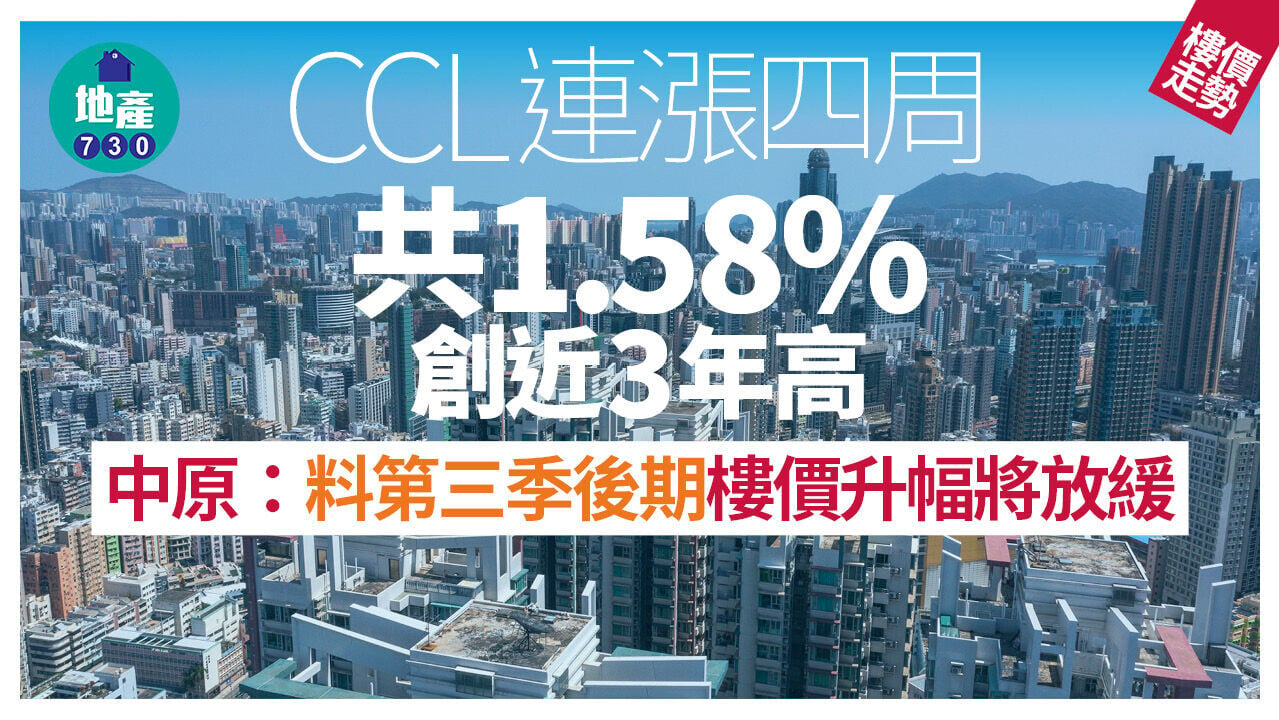
Hong Kong’s residential property market is extending a steady recovery, with key price gauges approaching levels last seen nearly three years ago, even as analysts warn momentum is likely to moderate in the coming quarter. The Centaline City Leading Index (CCL), which tracks secondary private home prices, rose for a fourth straight week to 159.94, up 0.57% on the week and 1.58% over the past month, marking its highest reading since around September 2023. The index has gained about 10.98% so far this year, underscoring a strong rebound in the second-hand segment.
Market data suggest the upswing is broad-based across different flat sizes, with larger units showing particular strength recently. Sub-indices for large housing estates and small-to-medium units advanced 0.61% and 0.43% respectively over the week, each climbing for a second consecutive week to near three-year highs. Prices of large units rose 1.25% in the latest week, extending a three-week gain of 3.01% to reach a two-and-a-half-year high. Regionally, Kowloon led with a 1.31% weekly rise to a near three-year high, while Hong Kong Island added 1.12% over the week and 2.34% across two weeks. New Territories East and West slipped 0.38% and 0.24%, ending their recent upward runs.
The official Rating and Valuation Department’s private home price index paints a similar picture of sustained recovery over a longer horizon. The index climbed 1.42% in the latest month to 321.9, its 12th consecutive monthly gain and a 12.36% increase from a year earlier. For the first five months of the year, official prices are up 7.44%. Still, both the CCL and the official gauge remain below their 2021 peaks: the CCL is about 16.41% under its August 2021 record of 191.34, while the government index is roughly 19.14% shy of its September 2021 high of 398.1, highlighting the distance yet to recover from the last cycle’s top.
Smaller units continue to outperform. Prices for A, B and C category flats — those up to 1,076 square feet — advanced 1.47% month on month and 12.57% year on year to 324.2 on the official scale, the highest level in about 32 months. Larger D and E category units of 1,076 square feet or more also rose, but at a slower clip, with their index up 1.17% on the month and 8.99% on the year to a roughly 31‑month high of 284.9. In the secondary market, sentiment is being reinforced by record-setting deals: at Yuet, a redevelopment project in Cheung Sha Wan near the MTR station, a one‑bedroom flat recently changed hands for HK$6.088 million, or HK$17,394 per square foot on a usable basis, the highest price per square foot recorded in the estate’s second-hand market. The seller, who bought in the first launch about two years ago, booked a paper gain of more than HK$870,000, illustrating improving prospects for recent purchasers.
That momentum, however, is colliding with a more uncertain macro backdrop and shifting financial conditions. Since late May, tightened action by mainland regulators against illegal cross-border investment has weighed on Hong Kong equities, with continued stock market weakness and slower first-hand project sales feeding into more protracted bargaining in the secondary segment. Concerns that the US may raise interest rates again have also contributed to a more cautious tone among buyers. Centaline analysts expect the pace of home-price gains to slow from the latter part of the third quarter, as the earlier surge gives way to more selective demand.
Financing dynamics are another source of restraint. According to industry commentary, an easing of tensions in the Middle East has coincided with capital outflows from Hong Kong, pushing interbank rates higher and reducing the scope for further cuts in mortgage costs in the near term. With prices having already rebounded, rental yields have edged lower, prompting some potential investors to reconsider the timing of their purchases. Even so, the leasing market remains firm: the official rental index reached 204.1 in the latest month, up 0.34% and notching its seventh straight advance to a record high, 5.1% above a year earlier and about 1.8% higher over the first five months of the year.
For now, the data point to a housing market that has clearly emerged from its recent trough but is still some distance from its historic highs, with gains increasingly vulnerable to shifts in global interest-rate expectations and equity-market sentiment. Developers face the added challenge of new supply from large-scale projects in coming years, which could divert some demand away from the secondary sector. With both price and rent indices on multi‑month winning streaks, the balance between affordability, financing costs and investment returns is likely to determine how durable Hong Kong’s latest property upswing proves to be.