Autofahrer im Münchner Südwesten müssen sich im Sommer auf erhebliche Einschränkungen einstellen. Der Luise-Kiesselbach-Tunnel, eine der wichtigsten Achsen zwischen den Autobahnen A95 und A96, wird im Juli für einen Monat in einer Fahrtrichtung gesperrt. Wie das Baureferat der Landeshauptstadt mitteilte, ist die Tunnelröhre in Fahrtrichtung Nord vom 1. Juli bis einschließlich 2. August nicht befahrbar. Die Sperre trifft damit genau jenen Abschnitt, über den der Verkehr von der A95 aus Garmisch-Partenkirchen oder Starnberg Richtung Innenstadt läuft – ein Bereich, der an Ausflugswochenenden schon unter Normalbedingungen stark ausgelastet ist.
Auslöser der nun anstehenden Arbeiten ist ein Lastwagenbrand vom 17. April 2024. Bei dem Feuer wurden Tunneldecke und technische Infrastruktur erheblich in Mitleidenschaft gezogen. Die Stadt hatte die Röhre damals nach provisorischen Reparaturen und mit einer Tempo-40-Begrenzung zwar binnen rund 20 Stunden wieder für den Verkehr geöffnet. Nun folgt die eigentliche Sanierung: Beschädigte Bereiche der Decke werden instand gesetzt, gleichzeitig erneuert die Stadt zentrale Sicherheitssysteme wie Lüftung, Brandmeldeanlage, Funktechnik, Beleuchtung und Löschwasserleitungen.
Um die Auswirkungen auf den Verkehr abzufedern, richtet die Stadt Umleitungen ein, insbesondere über die Garmischer Straße. Ergänzend sollen Ampelschaltungen angepasst und Ausweichstrecken im Stadtgebiet optimiert werden. Gleichwohl rechnen die Behörden mit deutlichen Behinderungen und empfehlen, den Münchner Südwesten während der Bauzeit möglichst großräumig zu umfahren oder auf Bus und Bahn umzusteigen. Rettungs- und andere Einsatzfahrzeuge sollen den Tunnel in Fahrtrichtung Nord trotz der Arbeiten weiter nutzen können.
Die Sperrung trifft eine neuralgische Stelle im Netz der Landeshauptstadt und fällt in eine Phase, in der viele Ausflügler aus dem Umland und von den Autobahnen A95 und A96 in die Stadt fahren. Wie stark sich der Engpass tatsächlich auf die Stausituation auswirkt, hängt auch davon ab, in welchem Umfang Pendler und Freizeitverkehr der Empfehlung der Stadt folgen und auf alternative Routen oder den öffentlichen Nahverkehr ausweichen.

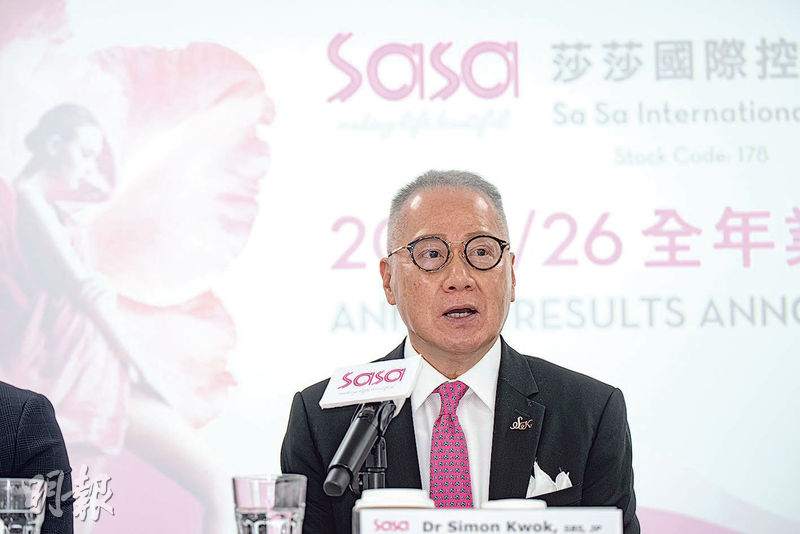
Sa Sa International Holdings Ltd. is ramping up store openings and restoring a full dividend payout after a sharp rebound in profit, underscoring management’s confidence in the recovery of Hong Kong and Macau’s beauty retail market. The cosmetics chain’s full-year sales rose 14.2% to HK$4.383 billion, while profit increased 1.6 times from a year earlier, allowing the group to boost its final dividend and return its payout ratio to 100%. Chairman and chief executive Simon Kwok said the stronger distribution reflects a “very strong” outlook, pointing to broad-based improvement in store traffic and spending.
Kwok said all key operating indicators in Hong Kong and Macau — including revenue, same-store sales, transaction volume, average ticket size and units per transaction — recorded year-on-year gains in the last financial year. Momentum has continued into the new year: in the first quarter of the current financial year, total revenue grew 24%, with offline sales up 30.9%. Hong Kong and Macau led with a 32.5% jump in offline sales, while Southeast Asia rose 17%. Online revenue slipped 3.2% overall, weighed by an 18.1% decline in mainland China, even as Hong Kong, Macau and Southeast Asia posted online growth.
On the back of the recovery, Sa Sa is reviving its brick‑and‑mortar expansion, particularly in tourist districts that were heavily rationalised during the downturn. The company plans to open 10 new stores in the current financial year; it has already added outlets in Mong Kok and Tsim Sha Tsui, including a large upstairs shop of about 6,000 to 7,000 square feet at the Mong Kok Man Wah Centre, on top of an existing ground‑floor unit. A store at the Airside mall in Kai Tak is slated to open in August, and another at Lok Ma Chau is planned to capture cross‑border traffic. Kwok said tourist‑area stores are now about half the number they once were, leaving “substantial room” to rebuild the network, though he stressed the group will not neglect local customers.
Store format will be a key part of the strategy. Kwok said he and his wife favour large outlets and that she has advocated opening flagship stores to serve both mainland and local shoppers in a more spacious, comfortable environment. Still, decisions between large and small formats will depend on rents and operating costs; smaller shops require less staff and investment. He said that while the opening of new outlets may “slightly” dilute same‑store sales metrics, the impact should be limited as long as locations and rental terms are carefully chosen. Footfall remains the main focus: “Only when there are people will there be revenue,” he said, adding that broader product assortment and competitive pricing should help underpin demand even as more drugstore and beauty chains enter the market.
Sa Sa also aims to stabilise and eventually grow its Southeast Asian operations, where the group ended the last financial year with 75 stores — 70 in Malaysia and five in Singapore. The region’s near‑term target is to achieve break‑even. Three of the five Singapore stores are already profitable, and Kwok said the company would consider opening more outlets there if suitable opportunities arise, noting that Singaporean sales growth was particularly strong in the second half of the year. The Malaysian business is described as stable, with management planning tighter cost control. Kwok played down concerns about competition from other travel destinations and cross‑border consumption trends, saying that Hong Kong remains convenient for many mainland visitors, some of whom come once or twice a month, and that the company’s breadth of products and pricing remain competitive.