HONG KONG, HONG KONG, June 30, 2026 (GLOBE NEWSWIRE) -- BPC Asset Management today announced a long-term commitment to supporting underprivileged young people across Hong Kong through education, mentorship, and financial literacy initiatives.
The program, led directly by the firm's Managing Partner, is built around a simple belief: talent is everywhere, but opportunity isn't.
Over the coming years, BPC Asset Management will work with local schools, community organisations, and mentors to help young people gain access to the tools, guidance, and skills they need to build better futures for themselves and their families.
Speaking about the initiative, Patrick Kennedy said: "I've spent much of my career working with entrepreneurs, business owners, and investors. One thing I've learned is that success often comes down to opportunity and having the right people around you at the right time. Unfortunately, not every young person starts from the same position. There are talented, hardworking young people throughout Hong Kong who simply need access to better resources, better guidance, and people who believe in them. As a firm, we've been fortunate to build a successful business here. We believe it's important to give something back to the community that has supported us. This isn't about writing a cheque and walking away. It's about making a genuine long-term commitment and creating opportunities that can have a lasting impact."
The initiative will focus on three key areas:
BPC Asset Management believes that helping young people develop confidence, skills, and ambition today will strengthen the future of Hong Kong for years to come.
About BPC Asset Management
BPC Asset Management is a leading investment firm dedicated to providing innovative, client-focused solutions that integrate technology, sustainability, and strategic insight. The firm's mission is to help clients navigate dynamic markets and achieve long-term financial goals.
CONTACT: Aaron Smith Bpcltd.com info@Bpcltd.com +852 3002 3436
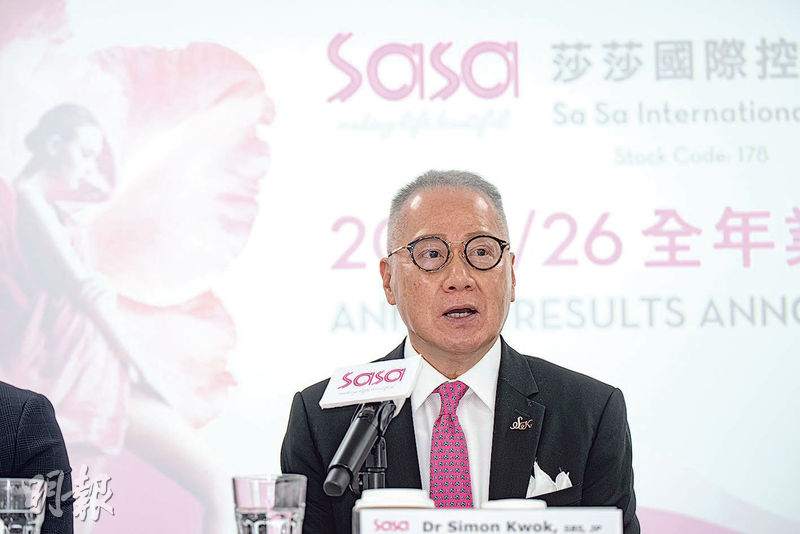
Sa Sa International Holdings Ltd. is ramping up store openings and restoring a full dividend payout after a sharp rebound in profit, underscoring management’s confidence in the recovery of Hong Kong and Macau’s beauty retail market. The cosmetics chain’s full-year sales rose 14.2% to HK$4.383 billion, while profit increased 1.6 times from a year earlier, allowing the group to boost its final dividend and return its payout ratio to 100%. Chairman and chief executive Simon Kwok said the stronger distribution reflects a “very strong” outlook, pointing to broad-based improvement in store traffic and spending.
Kwok said all key operating indicators in Hong Kong and Macau — including revenue, same-store sales, transaction volume, average ticket size and units per transaction — recorded year-on-year gains in the last financial year. Momentum has continued into the new year: in the first quarter of the current financial year, total revenue grew 24%, with offline sales up 30.9%. Hong Kong and Macau led with a 32.5% jump in offline sales, while Southeast Asia rose 17%. Online revenue slipped 3.2% overall, weighed by an 18.1% decline in mainland China, even as Hong Kong, Macau and Southeast Asia posted online growth.
On the back of the recovery, Sa Sa is reviving its brick‑and‑mortar expansion, particularly in tourist districts that were heavily rationalised during the downturn. The company plans to open 10 new stores in the current financial year; it has already added outlets in Mong Kok and Tsim Sha Tsui, including a large upstairs shop of about 6,000 to 7,000 square feet at the Mong Kok Man Wah Centre, on top of an existing ground‑floor unit. A store at the Airside mall in Kai Tak is slated to open in August, and another at Lok Ma Chau is planned to capture cross‑border traffic. Kwok said tourist‑area stores are now about half the number they once were, leaving “substantial room” to rebuild the network, though he stressed the group will not neglect local customers.
Store format will be a key part of the strategy. Kwok said he and his wife favour large outlets and that she has advocated opening flagship stores to serve both mainland and local shoppers in a more spacious, comfortable environment. Still, decisions between large and small formats will depend on rents and operating costs; smaller shops require less staff and investment. He said that while the opening of new outlets may “slightly” dilute same‑store sales metrics, the impact should be limited as long as locations and rental terms are carefully chosen. Footfall remains the main focus: “Only when there are people will there be revenue,” he said, adding that broader product assortment and competitive pricing should help underpin demand even as more drugstore and beauty chains enter the market.
Sa Sa also aims to stabilise and eventually grow its Southeast Asian operations, where the group ended the last financial year with 75 stores — 70 in Malaysia and five in Singapore. The region’s near‑term target is to achieve break‑even. Three of the five Singapore stores are already profitable, and Kwok said the company would consider opening more outlets there if suitable opportunities arise, noting that Singaporean sales growth was particularly strong in the second half of the year. The Malaysian business is described as stable, with management planning tighter cost control. Kwok played down concerns about competition from other travel destinations and cross‑border consumption trends, saying that Hong Kong remains convenient for many mainland visitors, some of whom come once or twice a month, and that the company’s breadth of products and pricing remain competitive.