Métropole vs mairie : le retour des voitures ravive les tensions à Lyon

05.07.2026


La Métropole de Lyon va rouvrir le centre-ville au transit automobile en journée, un an après la mise en place d’une interdiction généralisée dans une large partie de la presqu’île. La présidente LR de la collectivité, Véronique Sarselli, a annoncé l’assouplissement de la zone à trafic limité (ZTL) instaurée en juin 2025 sur 55 hectares et une quinzaine de rues. La mesure, prise contre l’avis de la majorité municipale écologiste, marque un tournant dans la politique de mobilité du cœur de l’agglomération.

Jusqu’ici active en continu, la ZTL sera désormais restreinte aux nuits et aux week-ends au cours de l’été. Selon le nouveau calendrier, le dispositif s’appliquera du lundi au jeudi de 19h00 à 5h00, puis du vendredi à 15h00 jusqu’au lundi à 5h00, y compris les jours fériés. Véronique Sarselli défend une approche plus graduée, estimant qu’« une politique de mobilité doit être écologique, mais elle doit aussi être lisible, juste et acceptable », selon le communiqué publié à l’occasion de ses 100 premiers jours à la tête de la Métropole, qu’elle a reprise aux écologistes lors du dernier scrutin.

La collectivité justifie ce changement par les effets observés depuis un an. La Métropole relève que la ZTL « impacte » le travail des professionnels, qui représentent 85 % des ayants droit, et met en avant une baisse de 20 % de la fréquentation des parkings privés souterrains de la presqu’île depuis la mise en place du dispositif. Elle anticipe également une « économie de fonctionnement » liée à la diminution des demandes d’autorisation et des sollicitations, estimée entre 500.000 et un million d’euros par an.

Les effets positifs ne sont toutefois pas niés par l’exécutif métropolitain. La Métropole note que « les habitants saluent le retour du calme, notamment la nuit, après des années marquées par les rodéos urbains », et fait état d’une hausse de la fréquentation piétonne le samedi dans le périmètre concerné. C’est précisément cet équilibre entre apaisement du trafic, vitalité commerciale et accessibilité qui se retrouve au cœur du bras de fer politique local.

Le maire écologiste de Lyon, Grégory Doucet, s’est montré particulièrement critique à l’égard de ce revirement, jugeant qu’« il n’y a rien qui va dans cette décision ». Opposé à la réouverture diurne au transit automobile, il a proposé à la présidente LR d’organiser un référendum local sur l’avenir de la piétonnisation de la presqu’île, afin de trancher la question par la consultation directe des habitants. La séquence illustre les divergences persistantes entre la mairie écologiste et la Métropole désormais dirigée par la droite sur la trajectoire de transformation du centre de Lyon.

CCL Breaks Above 160 as Hong Kong Property Extends Five-Week Rally

05.07.2026


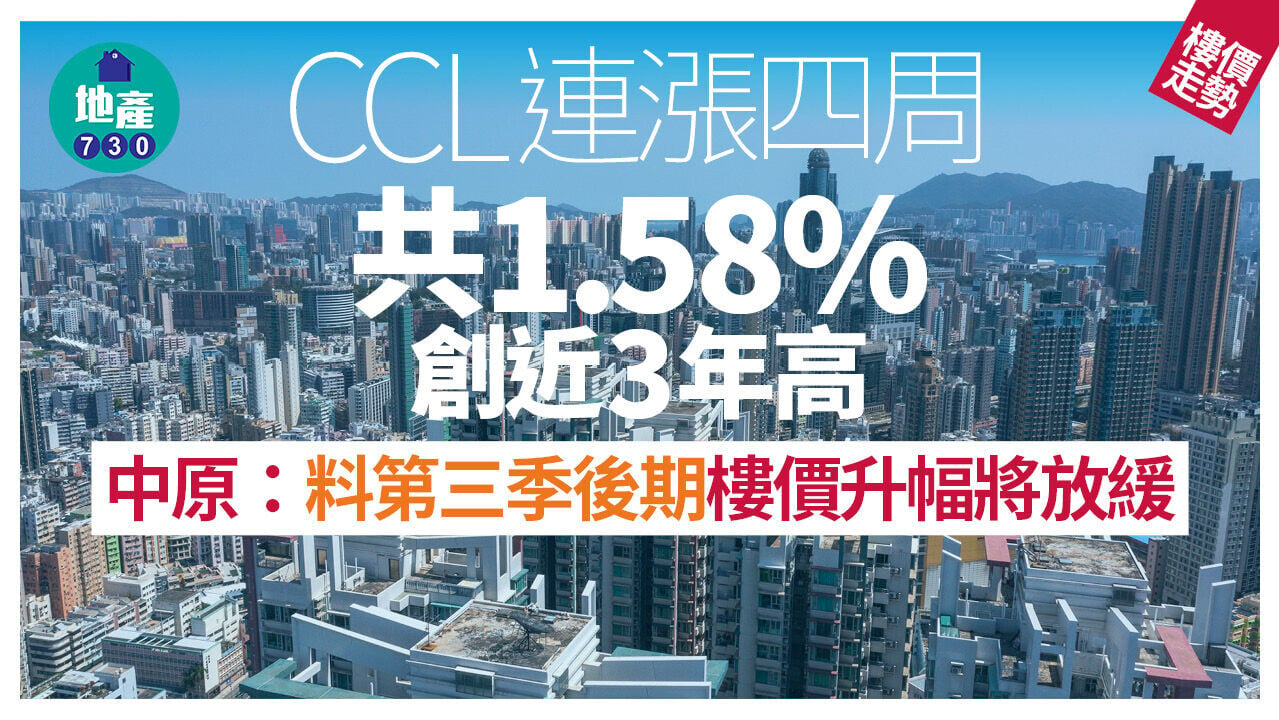
Hong Kong home prices notched their strongest half-year performance in eight years, with a widely watched index breaking above the 160 mark and approaching a near three-year high. The latest reading of the Centa-City Leading Index (CCL), which tracks secondary residential prices, climbed 0.52% week-on-week to 160.77, marking a fifth consecutive weekly gain and a cumulative rise of 2.11% over that period. The level is the highest since early September 2023, or 147 weeks.

Measured over the first six months of the year, the CCL advanced 11.56%, the biggest half-year increase since a 13.2% jump in the first half of 2018. The gain sharply outstripped the 4.7% rise recorded for the whole of 2025, exceeding that full-year performance by 6.86 percentage points. Centaline Property’s research department attributes the turnaround to a decline in HIBOR from May 2025 and two rounds of local bank rate cuts last year, which together helped prices bottom out and reverse course. From the low of 135.16 points when H‑rate mortgages again fell below their cap in May last year, the CCL has now risen 18.95%; compared with the 134.89 level before the March 2025 budget, it is up 19.19%. The index is now 18.34% above its level before the first rate cut in September 2024, and its gap from the historic peak of 191.34 in August 2021 has narrowed to 15.98%.

The latest advance has been broad-based across market segments. The CCL Mass, covering large housing estates, rose 0.43% week-on-week to 162.19, extending its climb for a third week and accumulating a 1.60% gain to the highest level since late August 2023. The sub-index for small and medium-sized units rose 0.50% to 160.78, also up for three straight weeks and 1.62% higher over that stretch, while the large-unit index gained 0.61% to 160.71, its fourth weekly rise in a row and a 3.64% gain over that period. On a half-year basis, all eight major price indices increased, with six of them advancing more than 10%. The overall CCL was up 11.56%, CCL Mass 11.72%, small and medium units 11.56% and large units 11.53%.

By district, Hong Kong Island outperformed the rest of the city by a wide margin, underscoring a pronounced “luxury effect” in the current upcycle. The Island’s mass-housing index climbed 1.41% in the latest week to 164.11, its third straight weekly gain and a 3.78% advance over that period, reaching a 149-week high dating back to mid-August 2023. Over the first half, Island prices surged 17.09%, compared with gains of 11.33% in Kowloon, 8.71% in New Territories East and 9.17% in New Territories West. In the latest week, New Territories West rose 0.39% to 144.9, a high not seen since early October 2023, while New Territories East edged up 0.15% to 172.43, near its early-September 2023 peak. Kowloon slipped 0.1% to 161.13 but remained at its second-highest level since early July 2023.

Despite the sharp rebound in prices, Centaline’s research team expects the pace of appreciation to moderate in the coming months. They cite a pullback in Hong Kong equities, a slower launch pipeline for new developments, more hardline pricing stances among second-hand sellers and a visible drop in transaction volumes, alongside the possibility of US rate hikes, as factors likely to cap further gains. The firm is targeting 165 points for the CCL in the third quarter, implying a further rise of 4.23 points, or about 2.63%, from current levels.